

Turboprop
- Seats
- 6–9
- Range
- ~1,800 nm
- Per hour
- $1,800–3,200
Pilatus PC-12, King Air 350
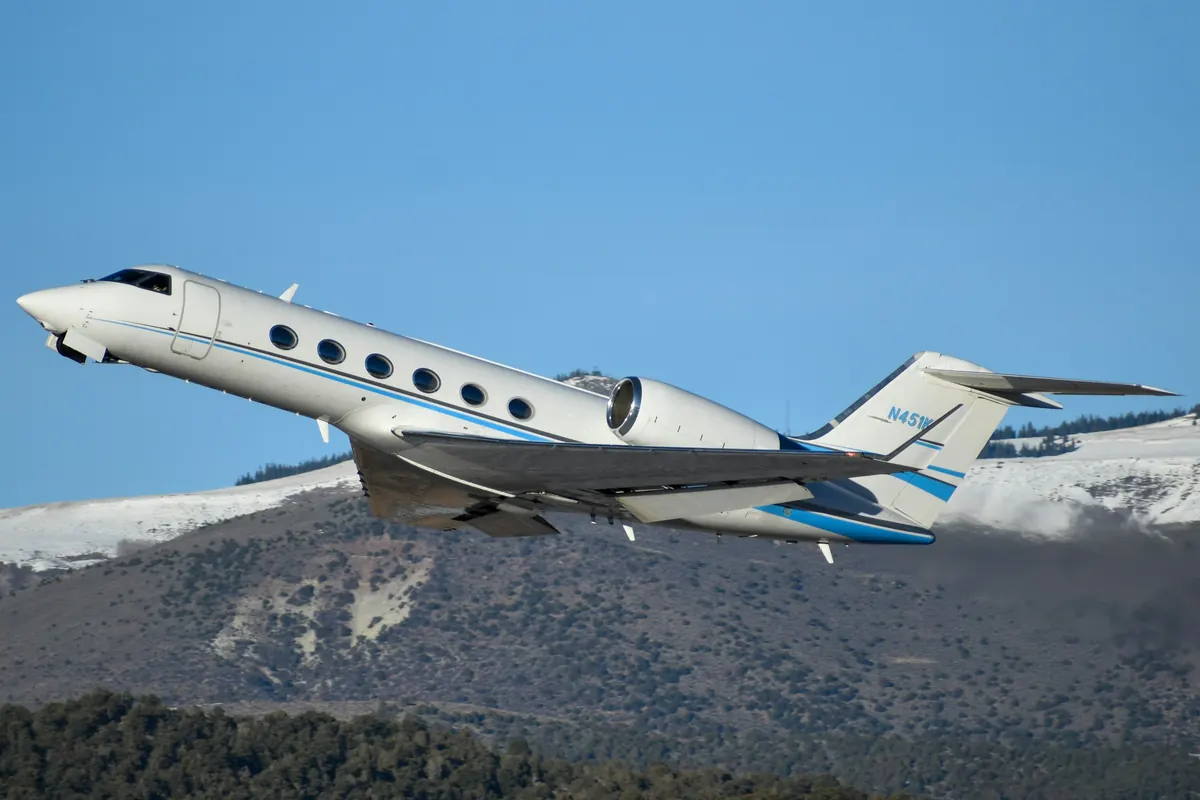
Charter, jet card, fractional, per seat
Honest hourly ranges, every fee named, and an all-in charter quote for your exact trip.
Four ways to pay
They all put you on a private aircraft. They differ in what you commit upfront, how the hourly cost is set and how much control you keep over the schedule. Here is the short version; the comparison tool goes further.
Estimates for US on-demand charter, before federal excise tax and fees.
Flight time only: hours × $4,500–7,000, before 7.5% tax and fees.
As a rough rule of thumb, fractional shares start to earn a look at around 50 hours a year, and whole ownership somewhere in the low hundreds.
| Feature | Charter | Jet card | Fractional | Per seat |
|---|---|---|---|---|
| How you pay | Per trip, for the whole aircraft | A prepaid block of hours at fixed hourly rates | A share of one aircraft, plus a monthly fee and an hourly fee | Per seat, on a flight someone else schedules |
| Upfront | Nothing to request a quote | The block of hours, paid in advance | The share purchase and a multi-year contract | One ticket at a time |
| Typical yearly use | Occasional, up to about 50 hours | Roughly 25 to 100 hours | 50 hours (1/16 share) and up | A handful of trips |
| Schedule and route | Yours, door to door | Yours, within peak-day rules | Yours, with notice periods | Set by the seller |
| Watch for | Repositioning, daily minimums, crew overnights | Peak-day surcharges, daily minimums | Fees continue in months you do not fly | Schedule changes or cancellation by the seller |
Swipe the table sideways to see all four.
Aircraft
Seats, range and hourly cost rise together. Choose the smallest aircraft that carries your group, bags and distance comfortably, and the price follows.
Pilatus PC-12, King Air 350

Phenom 300E, Citation CJ4, Learjet 75

Citation XLS+

Challenger 350, Citation Longitude, Praetor 600

Gulfstream G450, Challenger 650, Falcon 2000LXS
How it works
No app, no account. You talk to one charter advisor who knows your trip from the first message to the moment you land.
Route, dates, passengers and anything unusual: pets, skis, a tight connection. The form takes about a minute.
We go to Part 135 operators that suit the trip and send back aircraft options with all-in prices, not teaser rates.
You pick the aircraft. The charter agreement names the operating carrier before you pay anything.
Your advisor confirms timing, the private terminal, catering and cars, and stays with the trip until you land.

Pricing
The hourly rate is only the start. These are the lines that turn a rate into a real number, and the ones we spell out in every quote.
Billed at the category's hourly rate for the time in the air, plus taxi time with some operators.
If the aircraft starts somewhere else, the empty flights to reach you and to get home are part of the cost.
Many operators bill a minimum for each day the aircraft is assigned to you, even on days it stays on the ground.
Hotel and expenses for the crew whenever the aircraft waits with you away from its base.
Charged on domestic US charter, and included in every quote we send.
A federal per-passenger charge, indexed every year.
Landing, parking and handling fees. Busy airports and peak weekends cost more.
De-icing in winter, catering, Wi-Fi, and international fees such as customs and overflight charges.
Popular routes
Typical aircraft and flight-time estimates for six familiar routes. Your quote adds repositioning, taxes and fees for your exact dates.
 TEB → DJT
 TEB → ASE
 VNY → SJD
 HPN → NCE
 OPF → LTN
 DAL → JAC
Estimates: flight hours × the category's typical hourly range, before repositioning, taxes, segment fees and airport charges. Times vary with winds and aircraft.
Safety and standards
We arrange the trip; a certificated air carrier operates it. In the US that means an operator holding an FAA Part 135 certificate, with its own maintenance programme, training standards and crew duty limits. Abroad, the local equivalent applies.
The federal rules for on-demand air carriers. Operators are certificated and overseen by the FAA, and crews fly within legal duty and rest limits.
Third-party ratings of charter operators. Gold reflects safety data; Gold+ and Platinum add on-site audits.
Audits operators against its own standard. Operators that pass can hold Wyvern Wingman status.
The international code of practice for business aviation, with operators registered at stage 1, 2 or 3 as their safety system matures.
Ask for an operator's certificate and audit status before you book; you will have both. The rules themselves are public: 14 CFR Part 135.
On-demand charter in the US typically runs from about $1,800 an hour for a turboprop to $13,000 or more for a large-cabin jet, before tax and fees (estimates). The total for a trip adds repositioning, daily minimums, crew overnights, airport fees, 7.5% federal excise tax on domestic flights and a small per-passenger segment fee.
Often not per hour. A card buys fixed rates and guaranteed availability in exchange for paying upfront. With a few trips a year and flexible dates, on-demand charter frequently costs less; if you need certainty on peak days, a card can be worth it. Read the peak-day surcharges and daily minimums before you buy one.
When you fly enough to use a share. A 1/16 share works out to about 50 flight hours a year. Owners pay for the share, a monthly management fee and an hourly fee for time flown, so it rewards steady, predictable flying.
Flight time, repositioning, federal excise tax, segment fees and the airport and crew costs the operator can see for your itinerary. Anything that depends on later choices, such as special catering or a change of route, is priced and agreed with you before it is added.
They can be. Empty legs are repositioning flights sold at a discount, often 25–75% off, but the route and time are fixed and the flight can be cancelled if the original trip changes. They suit flexible travellers with a backup plan.
No. We are an air charter broker. Every flight is operated by an FAA Part 135 air carrier, or the foreign equivalent, which holds operational control of the aircraft. The operator is named in your charter agreement before you pay.
Often, yes. Plenty of operators take dogs and cats in the cabin, and each one signs off on pets aircraft by aircraft. Say how many are coming and roughly how big, and every option we send will be one that accepts them.
Neither. Asking for a price is free and binds you to nothing. Payment only comes up once you choose an aircraft, under the terms of the charter agreement.
Explainers
Longer reads on how private flying is priced, written to be useful before you spend anything.

Ways to fly
How yearly hours change the math between charter, jet cards, fractional shares and whole ownership.

Fractional
Shares, hours, monthly fees and the exit: how the costs of a fractional share stack up, line by line.

Ownership costs
Fixed costs keep running when the engines stop. What that means for owners and for your quote.

Request a quote
Tell us where, when and who is flying. A charter advisor will come back with aircraft options and an all-in price from Part 135 operators.